Jeronimo Monsalve ’26 made the most of a D.C. internship — and his time at HCC
Jeronimo Monsalve ’26 didn’t plan to start his college career by dropping out.
Nevertheless.
A transplant from Oakland Gardens, a Queens, New York City, neighborhood, Monsalve, then 18, had moved to Amherst to attend the University of Massachusetts as a biology major, a subject he didn’t have much interest in but one his parents, Colombian immigrants, thought might lead toward a career in medicine.
“I didn’t want to study biology,” he said.
More interested in public policy, Monsalve tried to change majors at UMass but was denied. He couldn’t break his lease, so felt stuck. Instead, he decided to research community college options in the Pioneer Valley and discovered Pathways, HCC’s celebrated transfer program.
“I knew if I put my head down and worked hard enough, there would be a great chance for me to transfer to a selective college,” he said. “That was my dream. I dropped out of UMass before I even started. It all worked out, thankfully.”
Indeed it did.
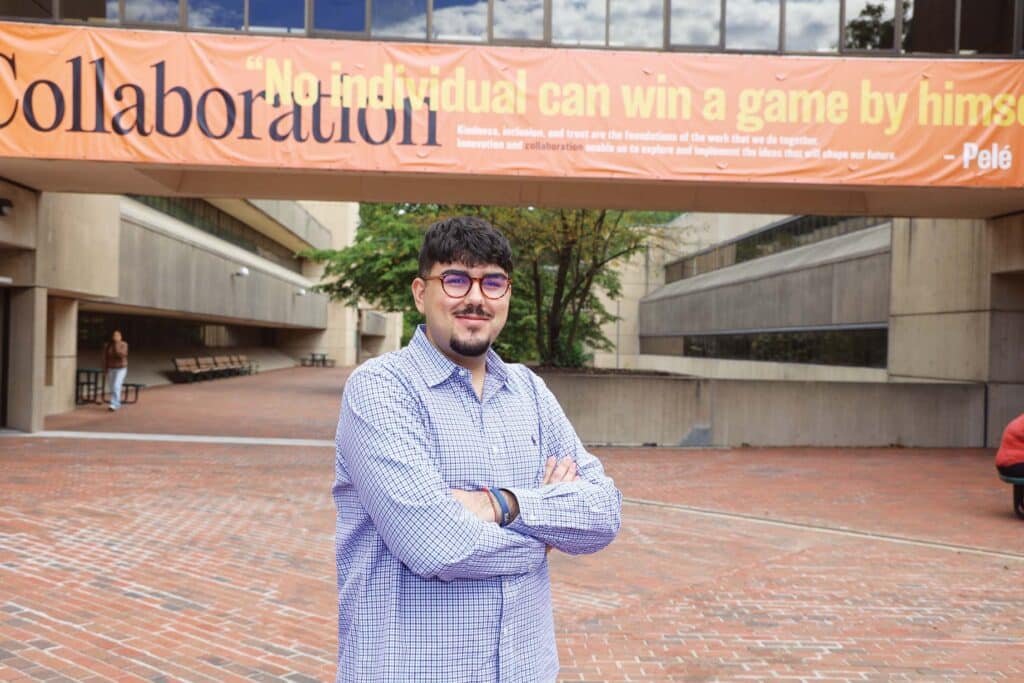
During his two years at HCC, Monsalve, a first-generation college student, literally became the poster child for Integrated Learning, a division that encompasses Pathways, Honors, Learning Communities, Community-Based Learning, and Academic Internships. By his second semester, he’d already been hired for a work-study position as the Integrated Learning division’s sole student ambassador. In that job, he did everything he could to promote the Integrated Learning programs to his peers, from assisting with office work to giving public presentations.
Monsalve, now 20, graduated from HCC in May with high honors and his associate degree in liberal arts. In September, he started the next leg of his academic journey on a full scholarship to Cornell University, the private Ivy-League college in Ithaca, New York.
“I think that speaks to what is accessible at HCC,” Monsalve said. “It’s so much more than what you do in the classroom.”
By his own admission, Monsalve had had a “lackluster” high school experience.
“I wasn’t one of the shiny apples,” he said. “I wasn’t a great student. I had a lot of hardships, especially through COVID.”
Early interactions at HCC set him on a new trajectory. During his first semester, Pathways Coordinator Camille Close — Monsalve calls her “Miss Camille” — registered him for Cultural Anthropology with Professor Vanessa Martinez, the community-based learning program coordinator, who quickly became one of his mentors. Through that class, Monsalve participated in an oral history project for Wistariahurst Museum, conducting interviews with Holyoke residents about their experiences during and after the COVID-19 pandemic.
“That was eye-opening,” he said. “I learned a lesson that was vital to the work I do today, which is cultural humility. Understanding the backgrounds of every individual, understanding the context of how they got where they are. Collecting oral histories helped me figure out what I want to study and accomplish in my future. I knew that politics was something I wanted to learn more about.”
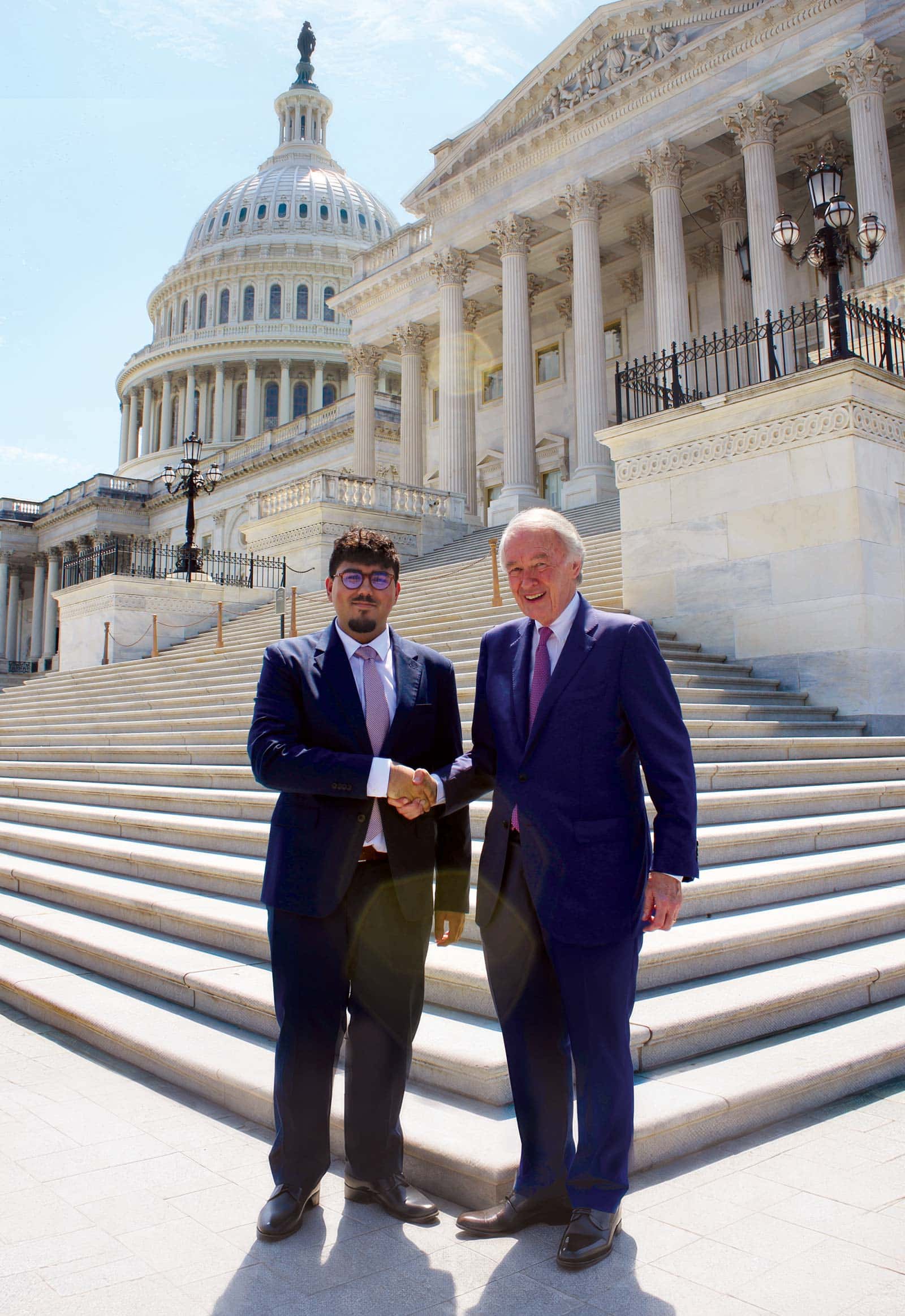
For the summer of 2025, Monsalve secured a competitive and much-coveted internship in Washington, D.C., in the office of U.S. Senator Ed Markey, a Boston Democrat. To get that position, Monsalve had to survive a rigorous application and interview process that included a final meeting with the Senator himself, who asked, point blank: “You’re from New York; why should you represent the people of Massachusetts?”
I knew if I put my head down and worked hard enough,
Jeronimo Monsalve
there would be a good chance for me to transfer to a selective college.
Monsalve had thought about that. He said he was dissatisfied with the current representation in the community where he grew up and that one day he would like to represent the Sixth Congressional District of New York in Washington.
“We are so far behind compared to Massachusetts,” Monsalve said. “I love the way Massachusetts carries itself, and I love how the legislators currently holding seats represent their people and how they push legislation and progress the state of Massachusetts. I would love to learn from them before returning to New York.”
With his selection, Monsalve joined just a handful of college interns in Markey’s office, all from Ivy-League schools. Among the hundreds of interns working in Senate offices, “I was the only community college student that summer, and the only man of color, at least that I met,” Monsalve said.
As a rising second-year student, he was also among the youngest.
At first, he felt nervous, that he didn’t belong and would not fit in. “The truth is I was wrong,” he said. “The other interns were incredibly accepting. They saw I was chosen for a reason, that I brought perspective. I brought lived experience. I had a community backing me that was unique in its own way that was not represented in the Senate, and that made me valuable.”
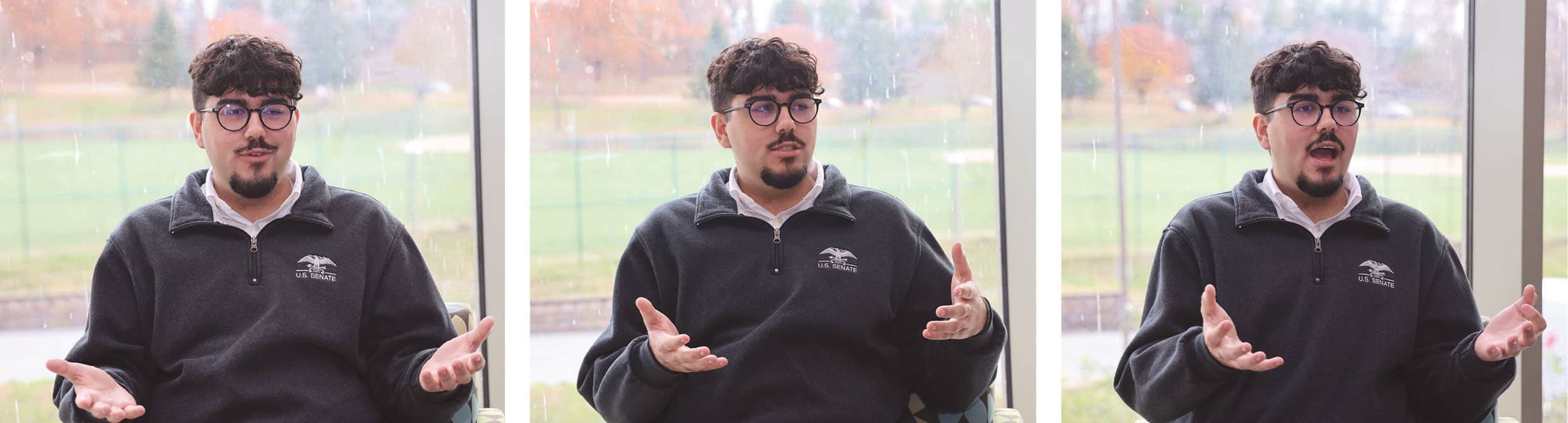
For the most part, Senate interns perform basic, administrative tasks — “constituent services,” said Monsalve. They respond to email and voicemail messages, draft letters and put together a digest of the day’s news for legislative staffers. But Monsalve was also soon assigned to work on issues before two committees on which Markey serves: The Committee on Health, Education, Labor, and Pensions; and the Committee on Small Business and Entrepreneurship, for which he helped draft two bills Markey proposed, the AI Civil Rights Act and the Small Business Relief Act.
He also worked with health industry experts at the University of North Carolina Chapel Hill and other universities to pull together estimates of the number of rural hospitals expected to close nationally if the Medicaid tax cuts included in the Administration’s “One Big Beautiful Bill” went through.
“We had a one-hour turnaround on that project, and it was incredibly stressful,” he said, “but it became the most notable part of my internship because it was used by virtually every senator on the floor and news anchors across the nation. I mean, we’re talking BBC, CNN — they all used our research, and it felt pretty good.”
That internship led to another back in western Massachusetts, when Monsalve was offered a three-day-a-week position with the law firm Bacon Wilson in its corporate commercial unit.
There are so many HCC students who can do the same exact things that I did.
Jeronimo Monsalve
All they need is empowerment.
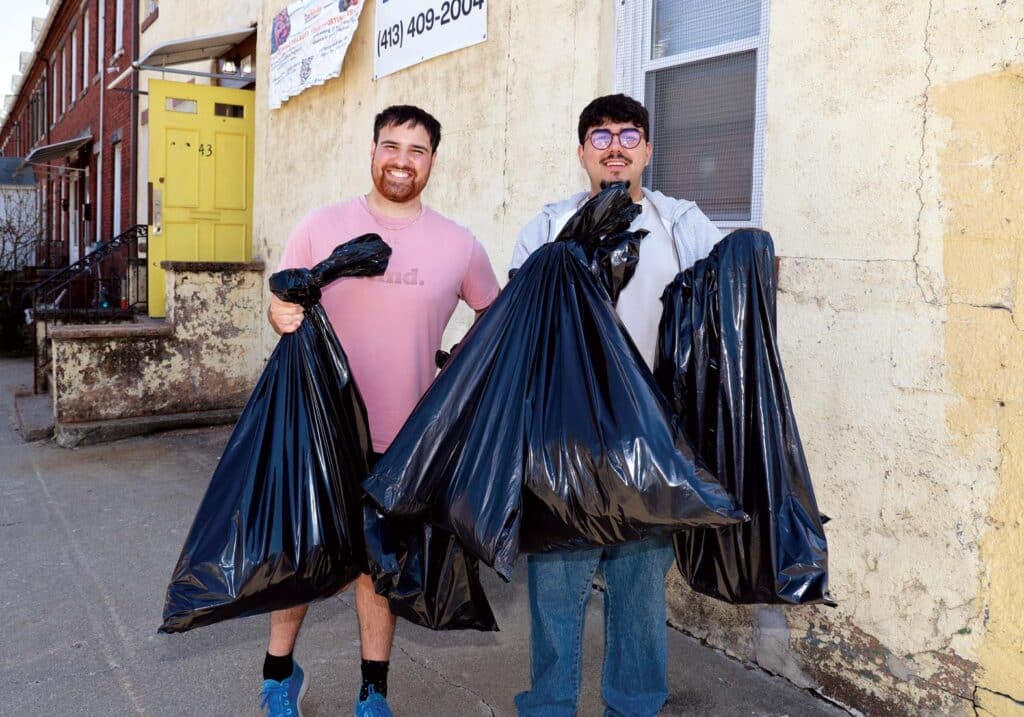
During his second year at HCC, he managed to balance the law internship with his classes and his work-study job in Integrated Learning, while also volunteering at the Amherst Survival Center on weekends, and assuming the presidency of Alpha Xi Omega, the HCC chapter of the Phi Theta Kappa Honor Society. In the spring, he worked with OneHolyoke and other community groups to organize the city’s 2026 Earth Day cleanup and was the keynote student speaker at the Community-Based Learning program’s end-of-the-year celebratory luncheon.
All that work paid off. In addition to Cornell, Monsalve was accepted for transfer to six competitive schools: Boston University, New York University, Fordham University, the University of Virgina, Amherst College, and Cornell.
He chose Cornell, because, in addition to a full scholarship, they offered him a job as an analyst in the policy lab of its Center for Applied Research on Work, in the university’s School of Industrial and Labor Relations.
Not long before he got his acceptance letter, he received a phone call from a Cornell admissions counselor.
“I expected a soft rejection,” Monsalve said, “or maybe some problem with my application.”
Instead, he was told, he’d done an excellent job: “Our committee decided on you in less than five minutes, and I had to be the one to tell you, you got it.”
“Instantly, the tears started flowing,” Monsalve said.
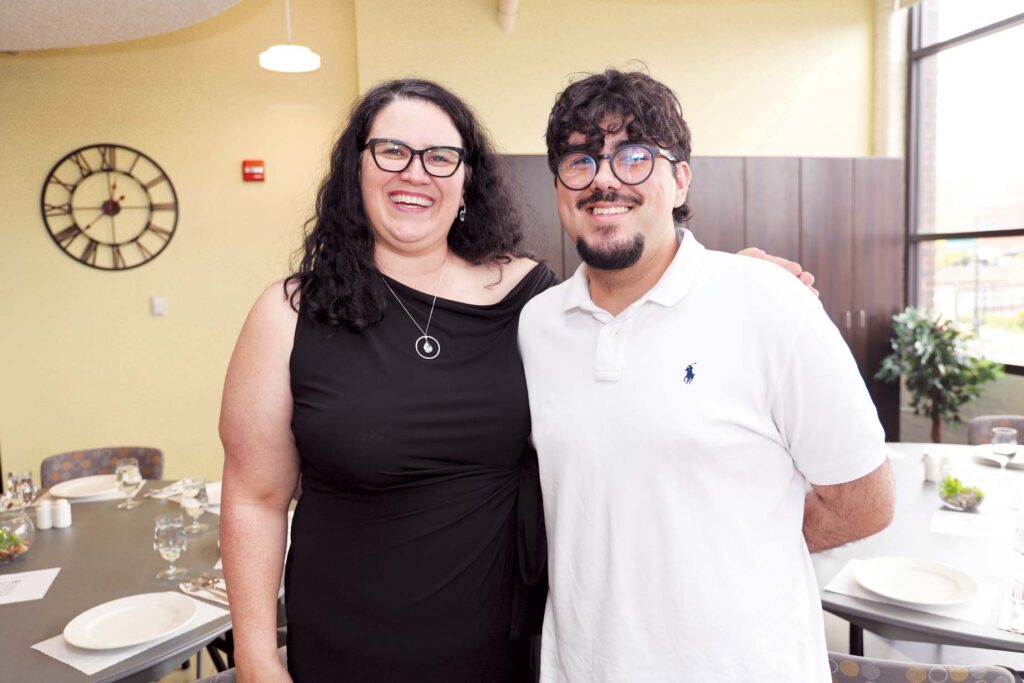
Despite his successes, Monsalve said he didn’t consider himself an exceptional student, but he did have exceptional teachers and advisers, and he told them so at the end-of-the-year lunch.
“The work you do really brings growth,” he said. “It brings opportunity. It brings scholarship. There are so many HCC students who can do the same exact things that I did. All they need is empowerment. If you invest in these students, I promise you, they will lead tomorrow.”