
Julissa Colón ’13 rises up
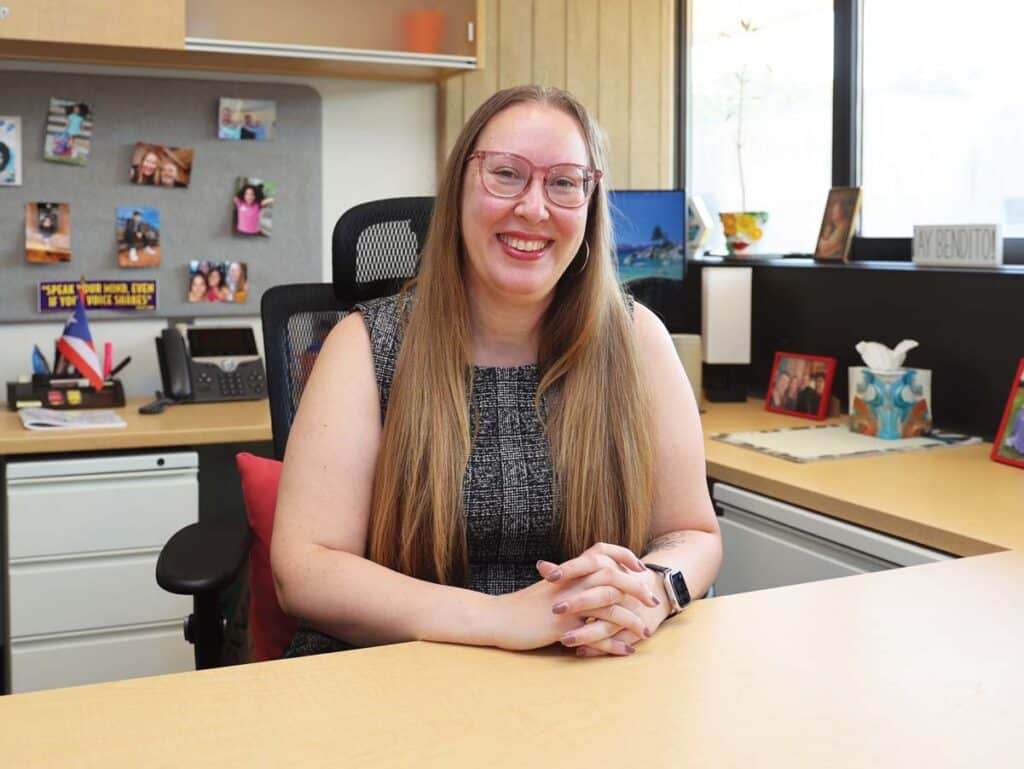
No one could ever accuse Julissa Colón ’13 of being unrealistically ambitious. She was 28 years old and the mother of two when she got a job as a clerk for the HCC Gateway to College program. By then, she had pretty much given up on the idea of pursuing a college degree.
“When I got that job, I was so proud and excited to be working here,” she said. “In my mind, I had made it. I was working in an office at a college. I thought, this is where I am going to work for the rest of my life.”
She didn’t mean working at HCC; she meant working as a clerk for Gateway.
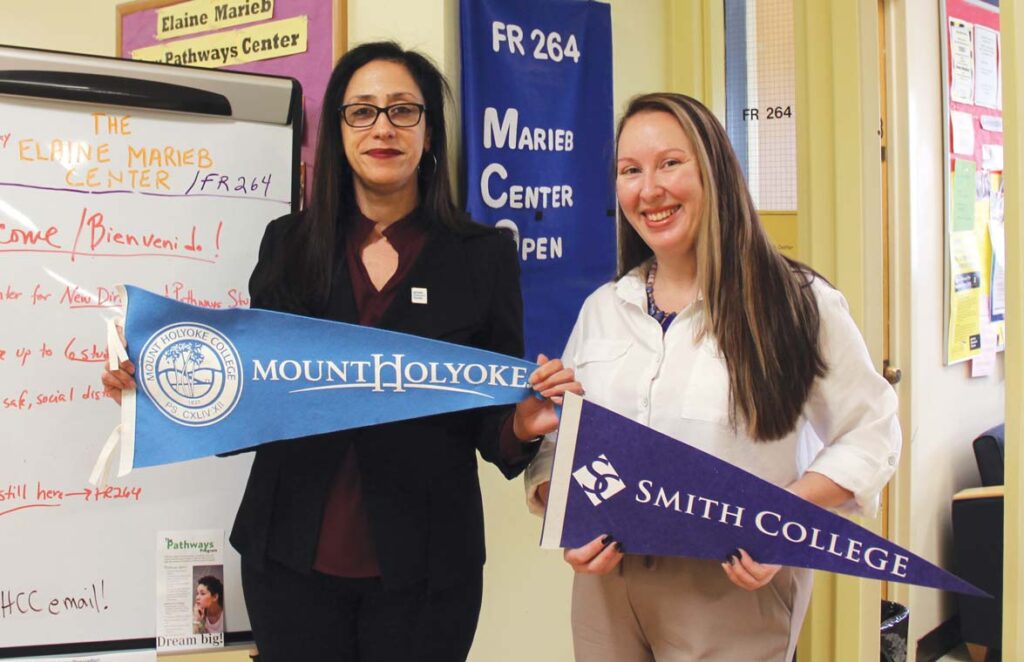
That’s not quite how it turned out. Encouraged and empowered by her HCC mentors, Colón earned an associate degree in liberal arts from HCC, then a bachelor’s degree from Smith College in Latin American studies and history, whereupon she was promoted from clerk to special programs coordinator at Gateway, another job she thought she might one day retire from.
Ditto in 2022, when Colón, a Puerto Rican who grew up in Springfield’s North End, left Gateway (with a heavy heart) to take the position of inaugural director of El Centro, HCC’s bilingual student support program.
“A dean? I can’t be a dean. I remember just thinking of the absurdity of that. I don’t know who I thought a dean was, but I didn’t think it was me.”
Julissa Colón
“I’m going to die here, is what I thought,” she said. “El Centro was the perfect alignment between the work I had been learning about and growing into and experiencing, and everything that I love — my community, my culture, my people.”
Nevertheless, Colón, now 44, left El Centro (with a heavy heart) in January to become HCC’s first dean of student experience, a position she was initially reluctant to apply for.
“A dean? I can’t be a dean. I remember just thinking of the absurdity of that,” she said. “I don’t know who I thought a dean was, but I didn’t think it was me.”
And yet it is. One of Colón’s mentors, Irma Medina ’97, former Pathways program coordinator now HCC dean of integrative and applied learning, called Colón’s ascension a “proud moment for all of us.”
“I think, as an institution, to see a student rise to that level, it just shows that, yes, we do put out leaders, leaders of the community and for the community,” she said. “Julissa is a testament to that. It’s a proud, full moment for us, as women, as women of color, women of this community and those shared experiences of being Puerto Rican, first gen, and young moms. Her success means success for us all. It validates what we knew all along, that this is where she belongs.”
Colón sat down with Connection editor Chris Yurko last spring to talk about her new job and her old ones.
You started working at HCC before you ever enrolled as a student.
I started as a clerk in 2010. I only had a high school diploma.
It didn’t occur to me to do school again. I thought I was too old. I had no idea what was possible. It was Vivian Ostrowski (now retired Gateway to College coordinator) who said I should go back to school. She can be very, very convincing, and she wouldn’t let it go.
Mentors have been really important to you.
I have been really blessed with mentors consistently throughout my life. I wrote about this in my application essay for Smith. I wrote about these groups of mostly women who’ve helped me move into the next cycle of my life every time, usually when I didn’t believe, usually when I thought they were crazy and couldn’t see it for myself.
I used to work at Bickford’s, the restaurant chain. I started as a hostess there, and then I was trained to be a server, and I learned so much about how to work with people and how to have integrity. The waitresses who worked there, some for as long as 25 years, they pushed me. They would bring me newspaper clippings for other jobs to encourage me to do something else. I think about that a lot.
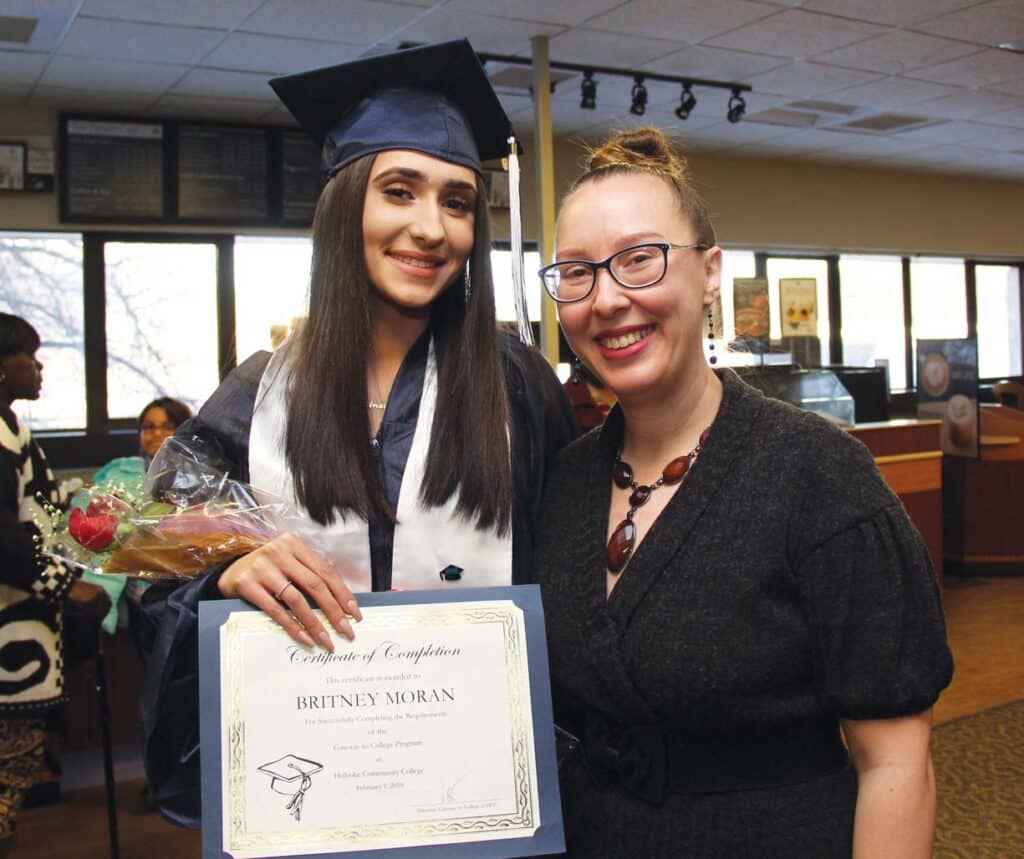
When I was in that clerk’s position at Gateway, Vivian did her magic and pushed me, and I got my associate degree. And then, Irma got me through my bachelor’s degree at Smith. Once I had my bachelor’s degree, I was able to get the job as special programs coordinator at Gateway.
Every new position has opened up another door to more people, to more ideas, to more potential for impact. That’s why I’m in this job now.
At the time, though, you thought being the director of El Centro was the be-all and end-all for you, right?
Absolutely. It was this beautiful symbiosis. That was some of the best work that I have done in my entire life. I’m deeply proud of what my team and I were able to do. And there is still so much more to be done. But when you suddenly realize that you’re probably not going to retire in that role, there’s fear, and there’s also excitement. One of the parts that made it easier for me to move beyond that position and that space is that El Centro became a place that nurtured other staff, that nurtured other opportunities. Most of the staff that came through there ended up starting master’s degree programs. That space became not just about the students, which is, of course, the priority, but it also became a space to grow our people, and I recognized that early on. In order for people to move up, you’ve got to move out. Watching this transition is one of the things I’m most proud of, creating an opportunity and space for those things to happen. I felt like I helped.
El Centro was brand new when you started there.
There was no program. There was an idea. I feel like we birthed that, and now they get to bring it to the next level.
Why did you want to be the first dean of student experience?
I wasn’t sure I wanted it at first.
What convinced you?
I have some pretty good friends who said to me, let’s read the job description, and see if you have any experience in any of these things. That’s something I’ve done pretty regularly with my folks, talking out the things you’re afraid of, having someone else help you make connections to the work you’ve done. I didn’t know all of it, but I got this glimmer of like, oh, I think I might be able to do this job, and I think I should try, because if I do get this job, I could have an impact on a greater group of students, and that was really what it was about. And the worst that could happen if I didn’t get it was that I stay working at El Centro, a job that I adore and love.
I have so many ideas about how we bring students to campus, and how we grow a sense of belonging, and the life cycle of students throughout the process. And that’s literally what this job is.
So, what exactly are your responsibilities as dean of student experience?
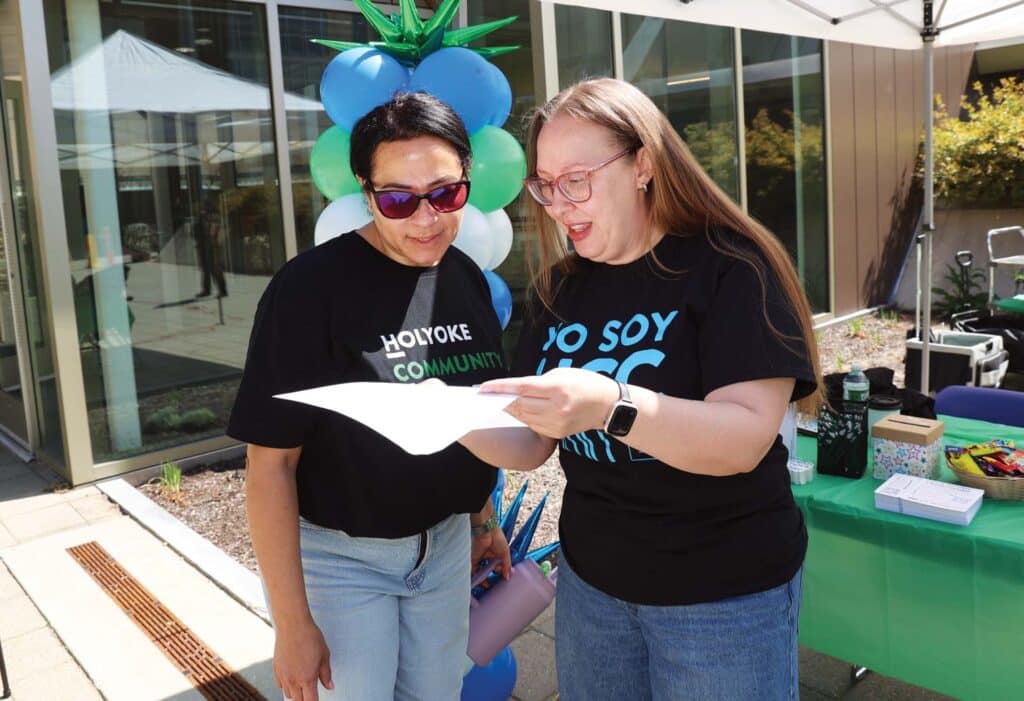
It’s the amalgamation of a lot of different pieces. The individual pieces are new student programs and orientation, student engagement, our partnership for mental health services with CHD (Center for Human Development), student conduct, the HCC CARE team (Concerns, Assessment, Referrals, and Education), and commencement. I also oversee the HCC SUCCESS programs: ALANA, SAMP and El Centro.
I see students from the beginning to the end of their college life cycle, from new student orientation to commencement, from the minute students fill out their applications to the day they walk the stage. This feels very much like my work at El Centro but on a much bigger scale. Our job is really about facilitating for the student an experience of connection, of being seen, of doing well, of being supported. The experience students have on campus matters. The quality of their experience goes beyond having a great classroom experience. I think that’s what this job was developed for.
I recently learned you also now oversee HCC’s SUCCESS programs: ALANA Men in Motion, SAMP, and El Centro.
I’m really happy about the shift in the direction of this position. You know I love the support programs. The work that I’ve done on campus has been with them for a long time, and part of the reason I applied for the dean’s position was because I wanted to have an opportunity to bring the work that we do in the support programs out to the rest of the campus community. I feel like the work they do, in terms of holistic healing and everything else, should be something that ALL students get to experience, not just students who happen to find the support programs.
This is your fourth job at HCC in 16 years. Since you started, you’ve earned your associate degree, your bachelor’s degree, and a master’s degree in public administration from UMass Boston. Why do you want to keep working here?
I genuinely love HCC. I love our students. I love the staff and the faculty that I work with. I love what HCC imagines itself to be. And I say “imagines itself to be” because we’re not there. We haven’t made it all the way to the vision of the greatness of what we are and could be. We’re always striving. I like the honesty that we’ve been able to share with each other about parts that aren’t good, that our students deserve better, and we have to do better and hold ourselves accountable. Sometimes we do things well, and sometimes we falter. There are times when we do great things that change the way people think about themselves and their education.
The support programs that we have across campus, with El Centro and SAMP and ALANA, make such a huge difference. Having Thrive — if a student comes to my office and is hungry, I have somewhere to bring them. If a student needs housing, there’s access to that; if they need support because they’re having trouble in the classroom, I know the people, and I know what they’re striving to do, and I just feel like this has been my home for so long.
I’ve been here for 15 years, and I’ve experienced a tremendous amount of growth, as a student, as the parent of a student (Luna Aponte ’21), as the aunt of a student. My family has been here. My friends are here. My commitment to my community is here.
Who comes to the school? My folks come to the school. My family. My community. My friends. And so, if my vision for my life is about engaging in things that make a difference for my community, then it has to be here.
There’s lots of other places, but this is where I grew. This is where I was planted. And if I’m going to flower, I want to flower for my people. I want to flower for the students here. If for the rest of my life my work is nurturing that, figuring that out, making it better, why would I want to leave?
When you first started here, you had no ambition to be anything but a clerk?
No, and that was great. That was a wonderful job. I couldn’t imagine anything else.
I even think about this job as dean and the fact that it didn’t even occur to me. I’ve always been someone who loved to learn. I didn’t do three degrees in 15 years because I hated it, right?
One of the best parts about this job is that I’m learning so many new things, and it’s fascinating. I’m learning about conduct and the way that the CARE team runs. I’m learning about student engagement and how to how to bring in high impact practices. We’re talking about student government and how we engage students to be more civically minded. This is giving me an opportunity to figure out what I bring into this space that only I can because of my history and my experience and my knowledge. And that’s been cool.
Can you talk about the tattoo on your left arm?
It’s Atabe. She’s a Puerto Rican goddess, basically. Her legs are a frog, and she is the representation of femininity, of motherhood, of power, of water and rebirth.
That seems fitting.
(She laughs.) Yea, it is.