
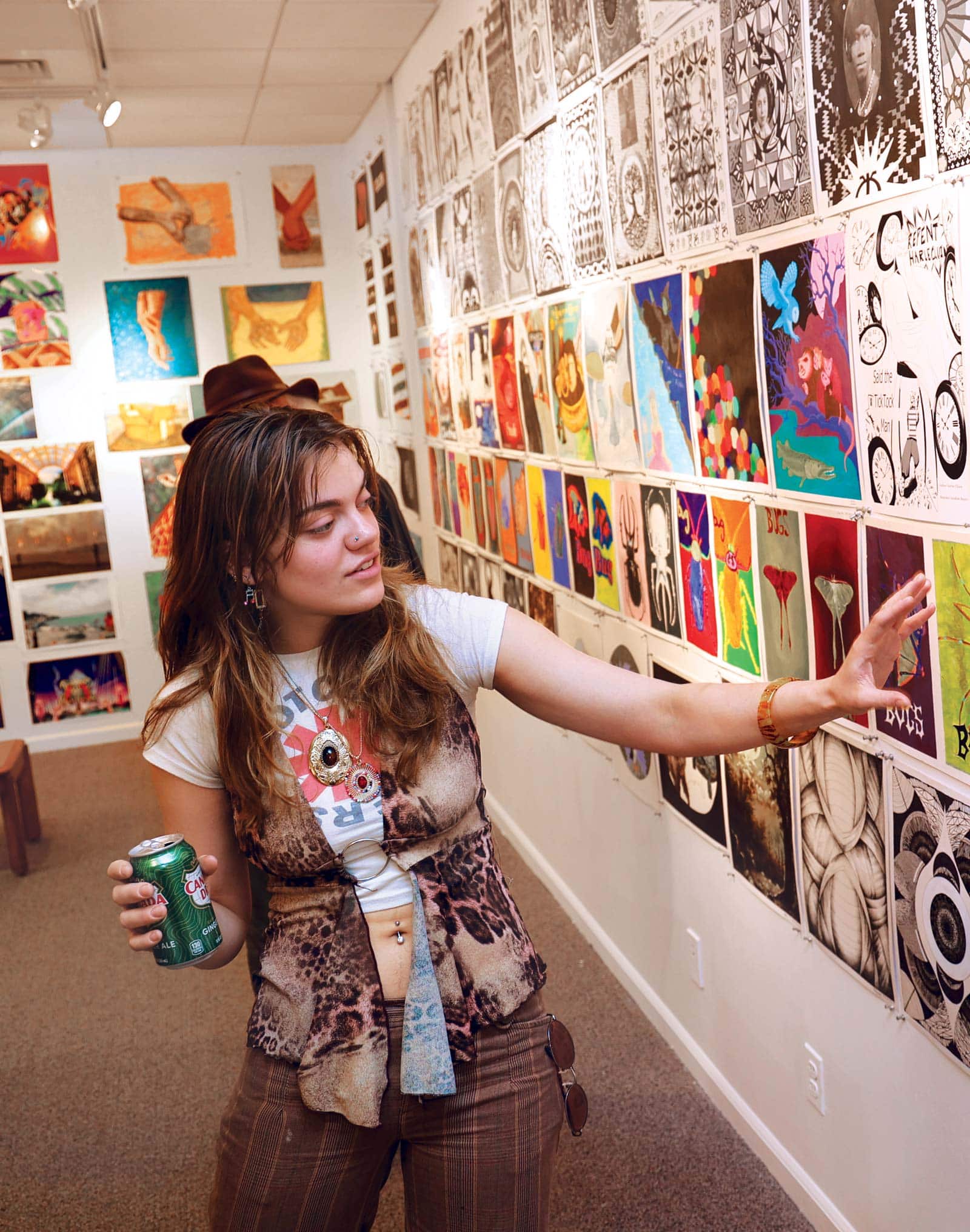
HCC marks 25th anniversary of Taber Art Gallery
“Art is not a luxury. A work of art should be a tool for learning, just as a book.”
– President David Bartley, Aug. 25, 2000
Not long after starting her job at HCC, Rachel Rushing felt she needed some sort of guiding statement to help make sense of her new position as director of the Taber Art Gallery and figure out what role the gallery should play in campus life.
She settled on a simple, four-word phrase and had it printed on little stickers in both English and Spanish that she handed out at college resource fairs and other campus events:
Art is for Everybody / Arte es para Todos
“That’s the message I wanted to internalize,” said Rushing, herself a working artist and educator. “I wanted students to know that no matter what their upbringing, or their first language, or even their major, everyone belongs in an art gallery.”
Although it might not have been expressed before in those exact words, that sentiment has pretty much been the mission of the Taber Art Gallery since it opened on Aug. 25, 2000.
Amy Johnquest
“Something that a college art gallery like the Taber can do is make students feel comfortable walking into galleries.
“It’s important that an art gallery feel inclusive,” said Amy Johnquest, HCC’s first Taber director, who retired in 2023. “Something that a college art gallery like the Taber can do is make students feel comfortable walking into galleries. If you’re in New York City — that’s the place to go gallery hopping — if you’ve never walked into a gallery off the street before, it can feel intimidating, and it shouldn’t.”
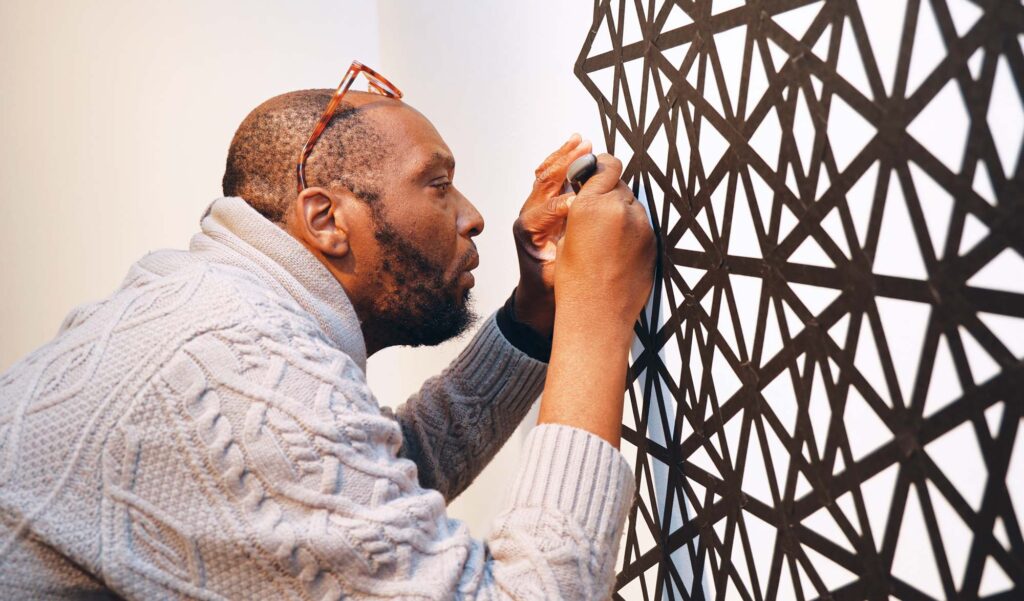
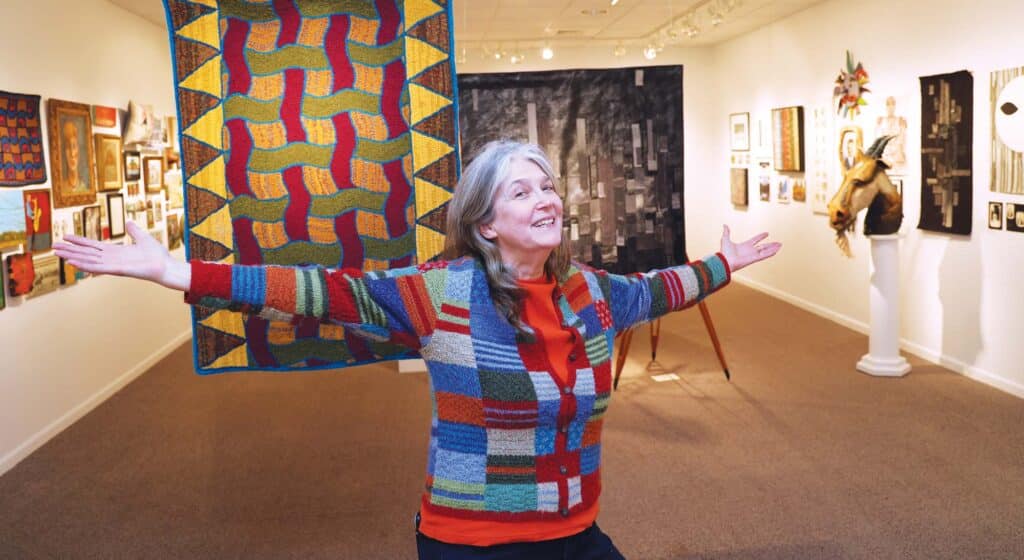
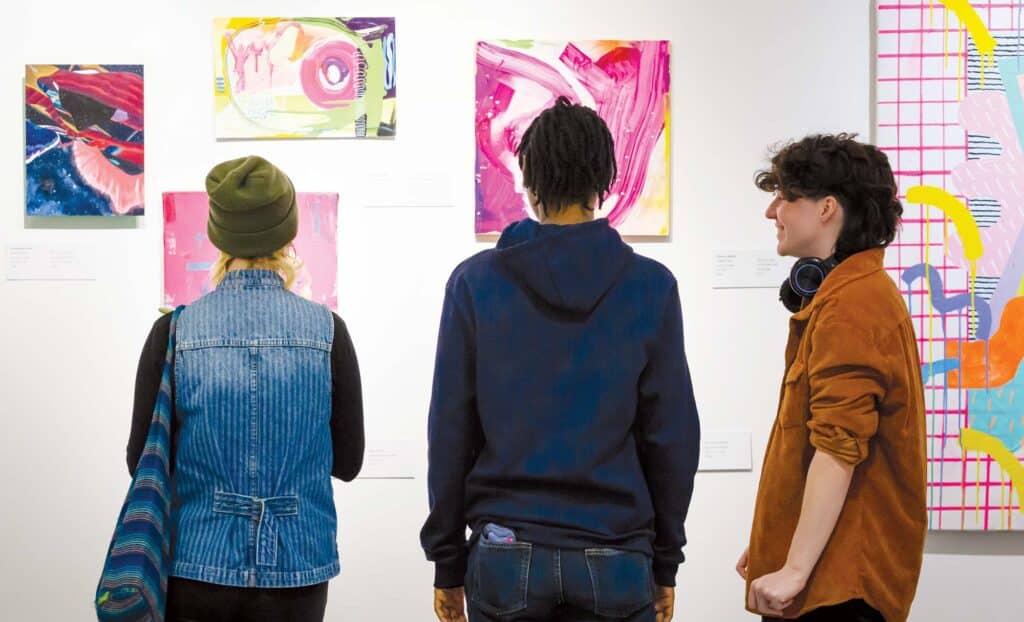
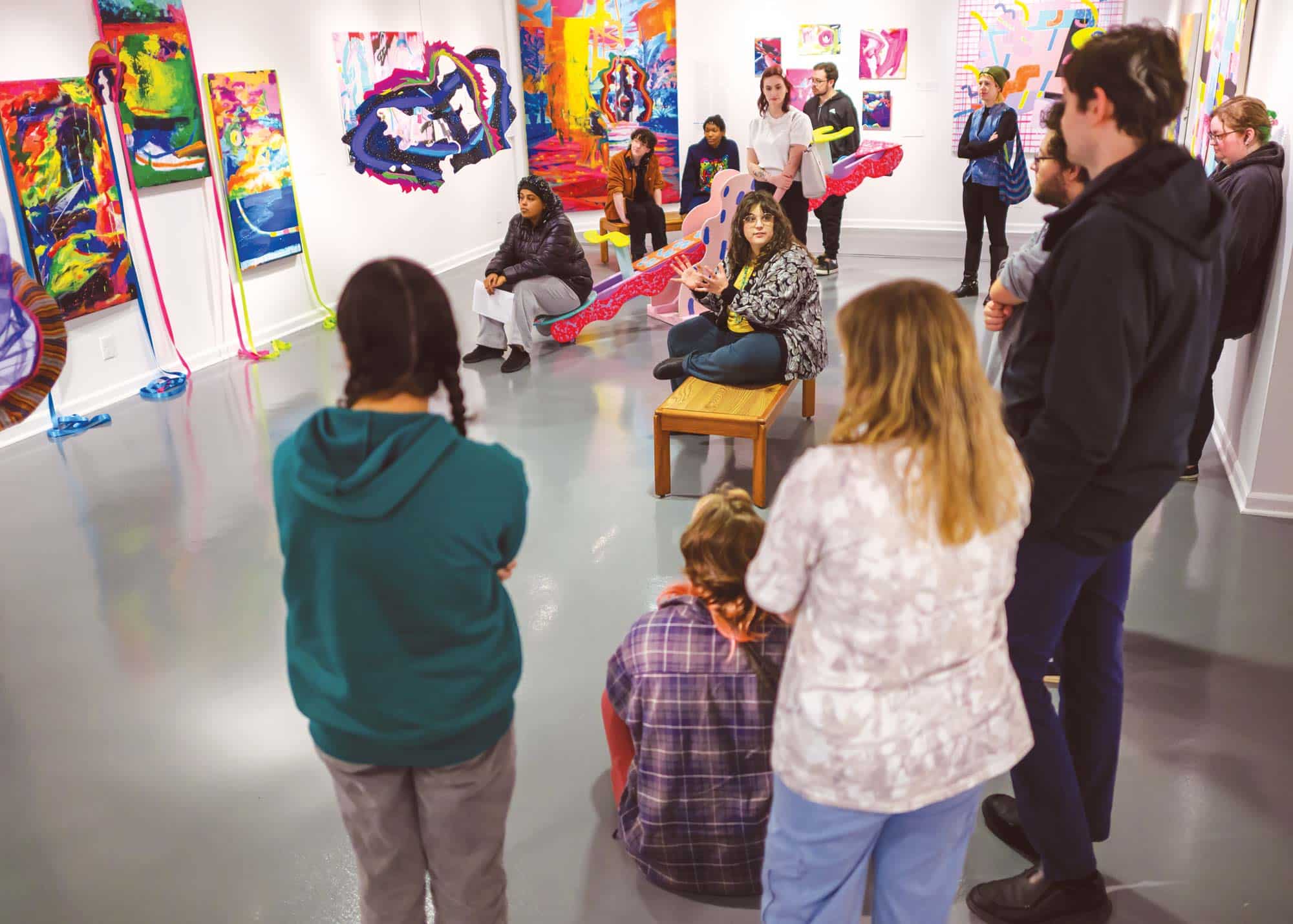
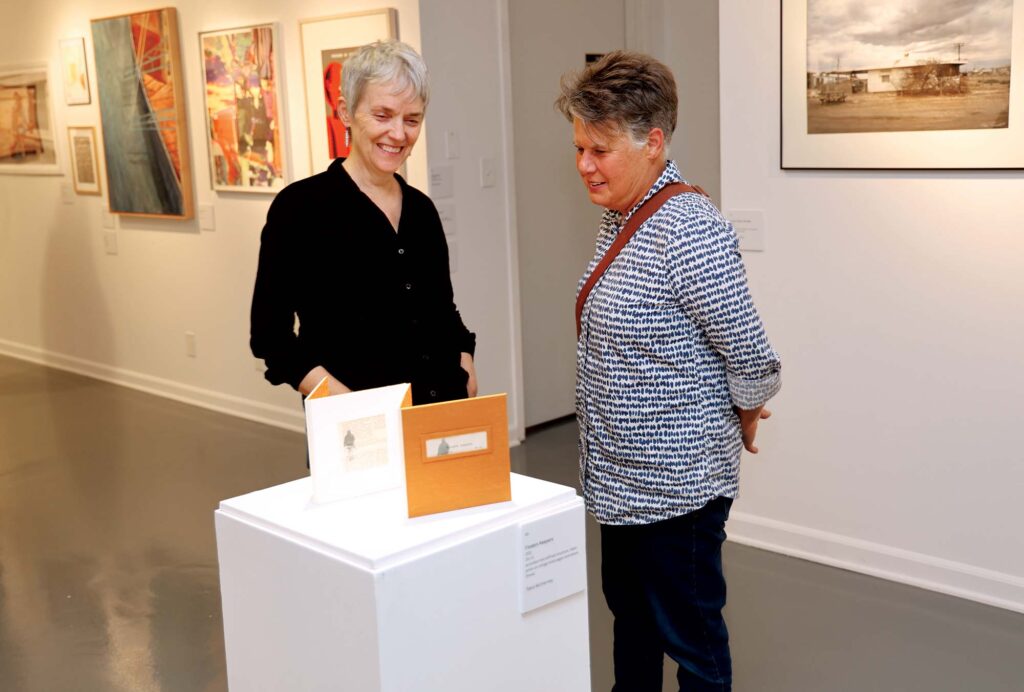
Last fall, HCC celebrated the anniversary of the Taber’s opening with a series of special events, including an art faculty (past and present) exhibition called “Milestone: 25 Years of the Taber Art Gallery.” For Rushing, Johnquest and others, the anniversary provided an opportunity to reflect on the history of the gallery and what it means to the college and surrounding community.
No one has been part of the HCC art scene longer than retired professor Frank Cressotti. He started his teaching career at HCC in 1969, shortly after the great fire of January 1968 destroyed the principal downtown campus, dispersing college offices, departments and classrooms out among several small city buildings. Visual art, a relatively new academic offering, was housed in the basement of the old Elmwood Building on South Street.
“We had no real studio space or anything,” Cressotti said. “For our first student art show, we just pinned things up on the walls wherever we could.”
Initially, the new HCC campus, when it finally opened on Homestead Avenue in February 1974, provided few amenities for art. The Fine & Performing Arts Building was still under construction and would not open until more than a year later.
The first “HCC art gallery” — it had no official name — where work from outside artists and students could be formally displayed, debuted sometime after the construction of the Campus Center in 1980, but that too was far from ideal. The gallery shared space on the third floor with the student lounge.
“If one were to visit the HCC art gallery today, the needs and shortcomings of this space would become immediately apparent,” Johnquest, the gallery director, wrote in a 1998 proposal for a dedicated space that would “provide artists with a secure and professional atmosphere to exhibit their work.”
Among the gallery’s shortcomings, she and others noted: dingy fabric peeling off the walls, thermostats awkwardly located in the middle of display areas, dysfunctional track lighting, theft, furniture pushed back against the walls to accommodate the room’s many uses, such as kickboxing classes and, at times, indoor soccer. There were other distractions: TVs, a large stone fireplace, a piano, trash, students sleeping — and, sometimes, “necking.”
“None of this is unusual for a student center,” Johnquest wrote, “but unfortunately degenerates the experience of viewing art and implies a lack of respect to the artist.”
Her proposal, with the support of the visual art faculty, found a champion in HCC President (and alum) David Bartley ’54.
“David was big on the arts,” said Cressotti. “He even took a photography class himself, maybe more than one, and made a point
of coming over to the art department all the time.”
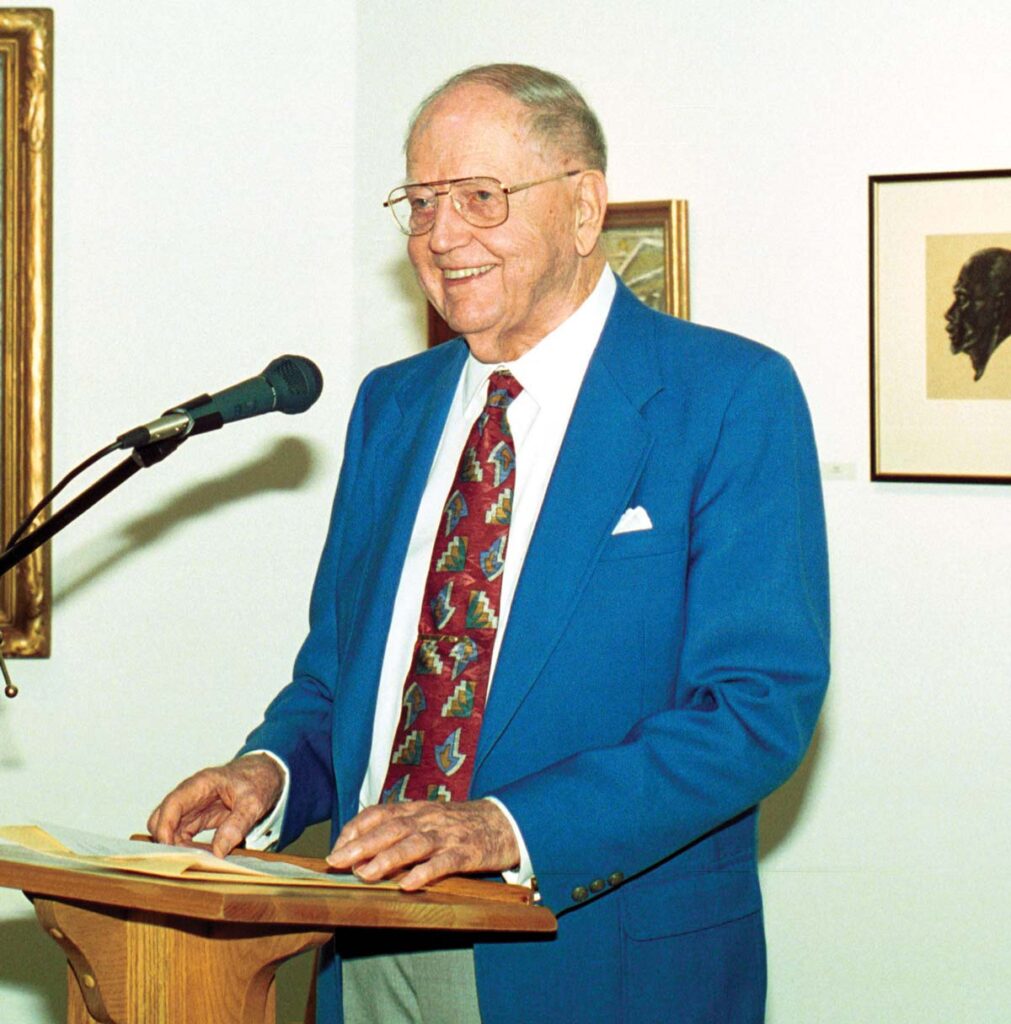
Bartley, a Holyoke native, former city councilor and state representative (and speaker of the house) maintained his community connections and never hesitated to leverage them for the benefit of HCC. He reached out to longtime friend Donald Taber, a retired Holyoke businessman and philanthropist.
In 1992, Taber, the former chairman of the American Pad and Paper Company, had donated his private art collection to HCC, 45 paintings and prints, some quite valuable. “I felt the college art department could find it useful for teaching,” Taber later told a newspaper reporter.
Without a dedicated gallery space, however, the works could only be displayed safely in secure campus locations, such as administrative offices, behind lock and key.
“Taber donated his collection, and that opened the door to the idea of a gallery,” said Cressotti. “Mr. Taber wanted the work shown. He didn’t want it hidden away.”
Taber donated $50,000. Bartley designated an office suite adjacent to the HCC Library for the creation of a new art gallery named for its benefactor.
“The college was growing,” said Cressotti. “Space was at a premium. The biggest thing David did was commit that space to a gallery, and Amy was the one who had the vision for how the gallery should look and how it should work.”
Looking back, Johnquest says she was pleased with the way it turned out.
“I know it was probably out of their comfort zone to dedicate that much space to something that wasn’t a classroom,” Johnquest said, “but, in essence, it serves as a classroom extension.”
HCC held a grand opening ceremony for the Taber Art Gallery on Aug. 25, 2000.
“Students entering HCC expect excellent faculty and staff, state-of-the-art technology, and a well-stocked library,” Bartley said in his welcome remarks. “Beginning this fall, they can study and enjoy actual art works in a serious space.”
Bartley said it was fitting the gallery adjoined the college library.
“They really belong together,” he said. “They are both essential resources. Art is not a luxury. A work of art should be a tool for learning, just as a book.”
For its first show, the gallery exhibited the Taber Collection. Since then, the Taber has hosted 134 exhibitions and featured more than 330 different artists, most directly connected to the western Massachusetts’ arts scene.
“One of the things we wanted to do was feature local artists, because there’s so many of them in the area,” said Cressotti. “Holyoke was really beginning to be kind of an arts town, and the gallery gave us a focus for that.”
And there was never a shortage of artistic talent to draw from in the Pioneer Valley.
“That wasn’t an issue,” said Johnquest. “It’s so hard for people to find places to show their work, so why give it to someone in New York who has so many more opportunities at their doorstep? We wanted to celebrate our neighborhood.”
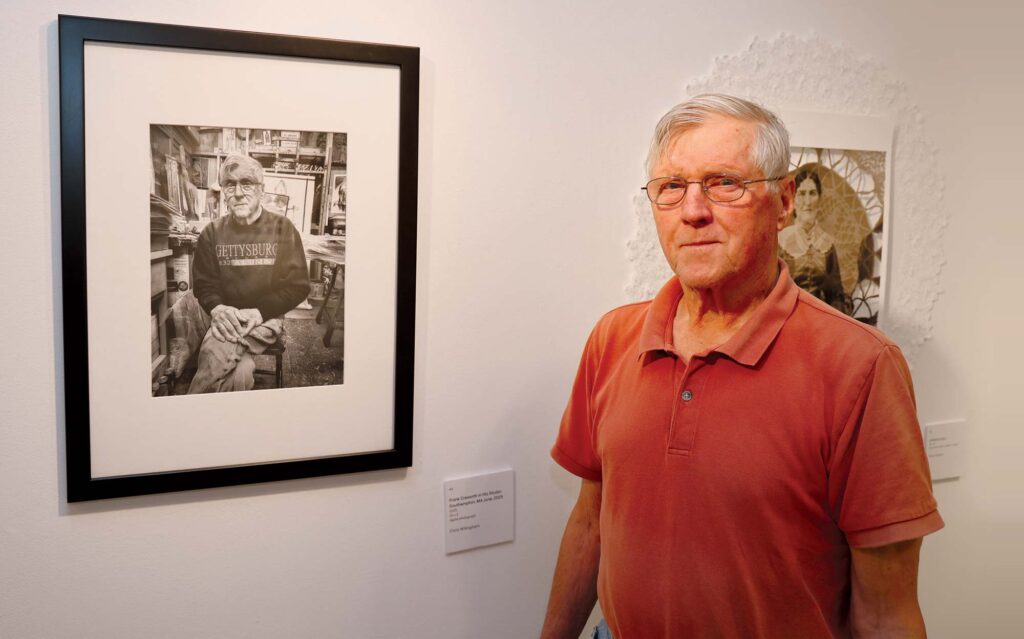
The gallery has also provided opportunities for the HCC Visual Art faculty to show their own work. Over the past 25 years, Cressotti has been part of four Taber exhibitions, two as a solo artist, his last in 2022, “Pages: Paintings on Newspaper.” He was also part of the fall 2025 “Milestone” group show as both an exhibitor and an exhibit; photographer and former HCC professor Chris Willingham submitted a black and white photo of Cressotti sitting in his Southampton studio.
“That was always nice, because, if you’re making art, you want to show it,” said Cressotti, who retired from HCC in 2014, but stuck around until 2024 as the curator for the HCC Permanent Collection, which now numbers around 350 works of art, including the Taber Collection.
Rachel Rushing
“Galleries are places of discovery, of wonder, of joy, that offer a wide range of audiences face-to-face and sometimes hands-on experiences with art.”
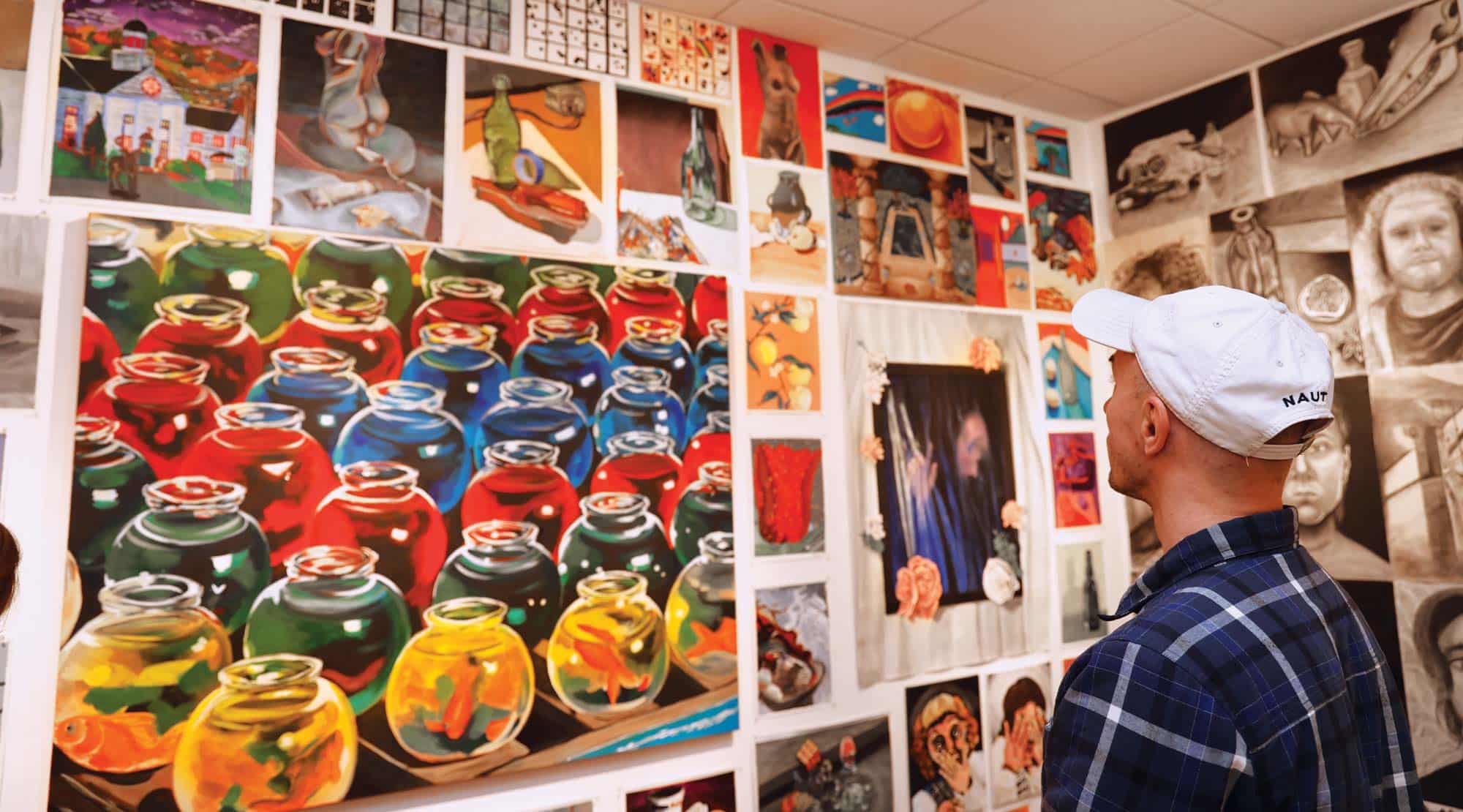
In addition to the faculty shows, the gallery has periodically featured the work of area high school student artists and hosts the annual HCC Student Art Exhibition to culminate the spring semester. The show’s opening reception, held in the gallery and library lobby, also provides the backdrop for the visual art department’s annual faculty awards ceremony.
“Every year we dedicate the gallery to the student show, so students, their parents, friends and families can see their work in a gallery,” said Cressotti. “It has always been a big deal and a big draw. That’s an experience that makes HCC special.”
Exhibition receptions attract students, faculty, staff, local artists, as well as arts alumni.
“I’ve had a lot of people come up to me and tell me how much the gallery means to them,” said Cressotti. “Textbook and magazine and newspaper photographs of art are nice, but when you’re in a gallery standing in front of something and seeing it, that is a completely different experience.”
The question of why it matters that a college has an art gallery was asked and answered by Taber Director Rachel Rushing herself during an anniversary celebration held in downtown Holyoke on Aug. 25, 2025, exactly 25 years after the gallery opened.
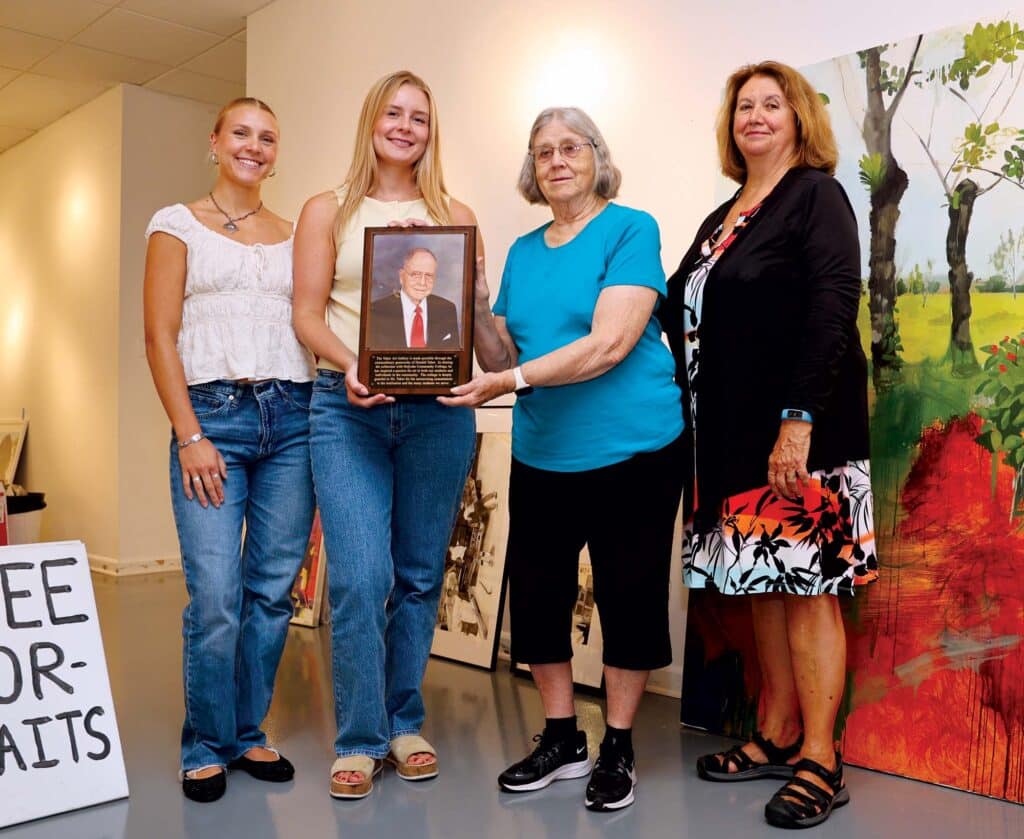
Beyond the public obligation to care for the artwork in its collection, she told a crowd that included the grand-daughter and great-grand daughters of Donald Taber, galleries are “places of discovery, of wonder, of joy, that offer a wide range of audiences face-to-face and sometimes hands-on experiences with art.”
Since the Taber is not a commercial gallery, its sustainability does not depend on art sales. Because it isn’t a nonprofit, public museum, “we don’t have to stick to a canon; we can be experimental,” she said. “We can try new things. We can prioritize people and their experiences.”
The educational value that the gallery brings to HCC is in providing an informal learning space, where students can seek out art because of their own curiosity, and have their thoughts and their feelings and their interpretations validated, she said, “and that’s empowering.”
“We are,” she said, “a place where different people and ideas can meet and connect, where everybody belongs.”
The Taber Legacy
In recognition of that donation, the HCC Foundation established the Donald Taber Scholarship in Art with proceeds from the annual golf benefit and money from “A Feast of Fine Art,” a May 27, 1992, gala event celebrating the first public viewing of the Donald and Wilmina Taber Collection.
Subsequently, Taber himself donated $5,000 to the scholarship fund, which has since supported the education of more than 50 HCC art students.
Upon Donald Taber’s death in March 2002 at the age of 100, his estate provided a $150,000 gift to the college specifically for the maintenance, preservation and upkeep of paintings owned by the college, the purchase of artwork by living artists, and the display and exhibition of artwork.
The HCC Permanent Collection now includes roughly 350 works of art, including the original Taber Collection, as well as 40 pieces purchased from HCC alumni, many of which will be on display in the gallery in August, (See back cover for details.)
On Aug. 25, 2000, exactly 25 years to the day after the opening of the Taber Art Gallery, members of the Taber family toured the gallery and viewed pieces from the original collection. Over the years, the Taber family has continued to donate to the scholarship fund. That night, at a Taber Art Gallery anniversary kickoff event, Donald Taber’s granddaughter, Laura McGrew, pledged an additional $10,000 on behalf of the family for the scholarship fund.